
Choosing full arch dental implants San Marcos residents can trust is a big decision, and North County Aesthetics & Implants wants you to make it with confidence. Dr. Khizer Hafeez, DDS, offers All-on-X, All-on-4, and All-on-6 care for people who have lost most or all of their teeth. Every plan we write is built around one person’s jaw, one person’s bite, and one person’s goals. If you’re wondering where you fit, the sections ahead will help you work that out.
Full Arch Dental Implants San Marcos

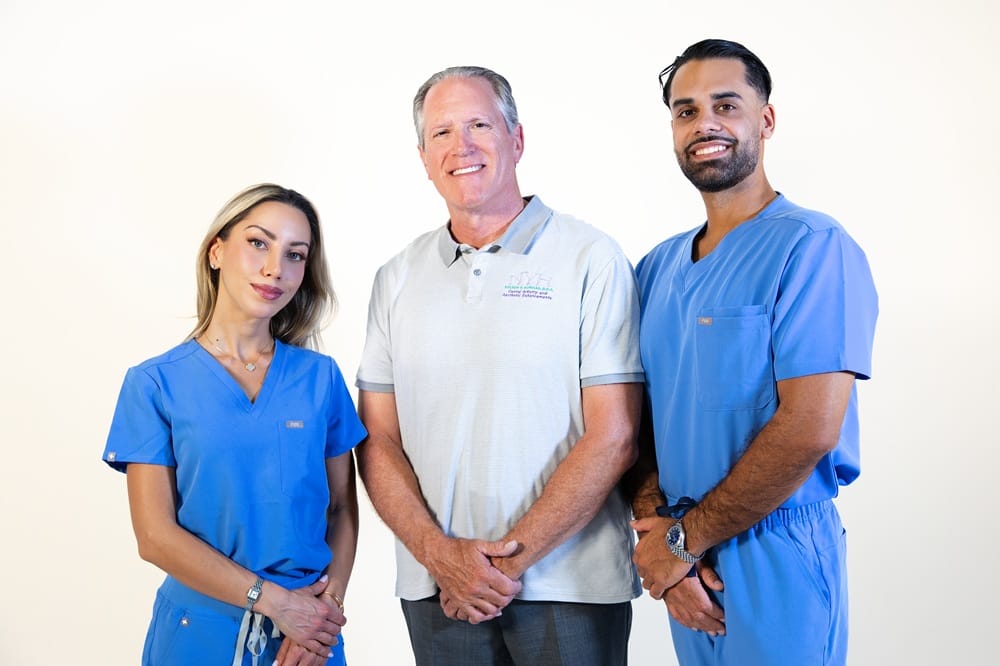
Meet the Doctors
Dr. Khizer Hafeez grew up surrounded by medicine, and shadowing his uncle, a world-renowned implant surgeon, led him to dentistry. He studied at Wilfrid Laurier University and the University of Guelph before earning his DDS from NYU College of Dentistry, is working toward Diplomate status with the American Board of Oral Implantology, and is an active member of the International Congress of Oral Implantologists and the American Academy of Implant Dentistry.
His co-practitioner, Dr. Dariyan Ayazi, also trained at NYU and completed a hospital-based residency that gave her experience treating medically complex patients. Together, they took over both offices from Dr. Nelson Howard, who founded the practice in 1992 and chose them because they matched his ethics and diagnostic approach.

Are missing or failing teeth holding you back?
Should you consider Full Arch Dental Implants?
When tooth loss reaches most of your mouth, meals, conversations, and photos all get harder. Work through the five questions below to see whether this option matches your situation.
Who is the right patient for Full Arch Implants?
The best-matched patient has lost nearly every tooth in one jaw, or has teeth too damaged to save. Mild to moderate bone thinning usually isn’t a dealbreaker, since angled posts can reach denser areas. Smoking, diabetes, and other health factors can change how you heal, so we talk through them early. Ask yourself whether you can brush and floss around your new teeth every day.
What happens during the treatment?
Picture three stages. First, we take a CBCT scan, part of our dental technology, to measure your bone volume and density. Next, while you’re relaxed under your chosen sedation, Dr. Hafeez places four to six titanium posts during the procedure and, when your bone allows, fits a temporary set of teeth. Over a few months, bone grows around each post to form a sturdy foundation, and we swap in your final teeth.
Where do Full Arch Implants fit in your care plan?
Think of treatment as a short series of appointments rather than one big event: planning, surgery, a few healing checks, and the final fitting. Our implant dentistry team coordinates every piece, including any extractions, so you work with one office from start to finish. We finalize the schedule before surgery, which helps you plan time off work and a ride home. Your treatment plan adjusts to how quickly you heal.
When should you start thinking about Full Arch Implants?
Sooner is better. Bone that no longer feels the pressure of tooth roots shrinks, and each year of waiting can limit your choices. Consider acting if your dentures click or slip, if you have to skip foods you love, or if your remaining teeth are loose. Once placed, the posts can last many years, though the final teeth may need replacing as they wear. Daily cleaning and regular dental check-ups make the biggest difference.
Why choose this treatment over dentures or bridges?
Dentures sit on your gums and can move when you chew. Tooth caps and bridges need sound teeth beside the gap, which you may no longer have. Traditional dental implants work, but placing one per tooth multiplies surgeries and healing time. Four to six posts per jaw replace the whole row with less hardware. In a clinical study that followed All-on-4 patients for 3 to 17 years, researchers write that the approach “yields good long-term results for both the maxilla and the mandible.” That makes it a dependable long-term solution, with a shorter timeline as a bonus.
Every Year Without Tooth Roots Leaves Less Bone to Build On
Your jawbone stays strong because chewing keeps it working. Remove the teeth, and the bone loses that workload and begins to shrink. A review in the Journal of Prosthodontics calls “Chronic residual ridge resorption” the primary intraoral complication of edentulation. Its author also noted there appear to be few ways to slow that loss once teeth are gone. A smaller ridge makes dentures harder to fit and implant planning more challenging, so the cost of waiting is paid in bone.
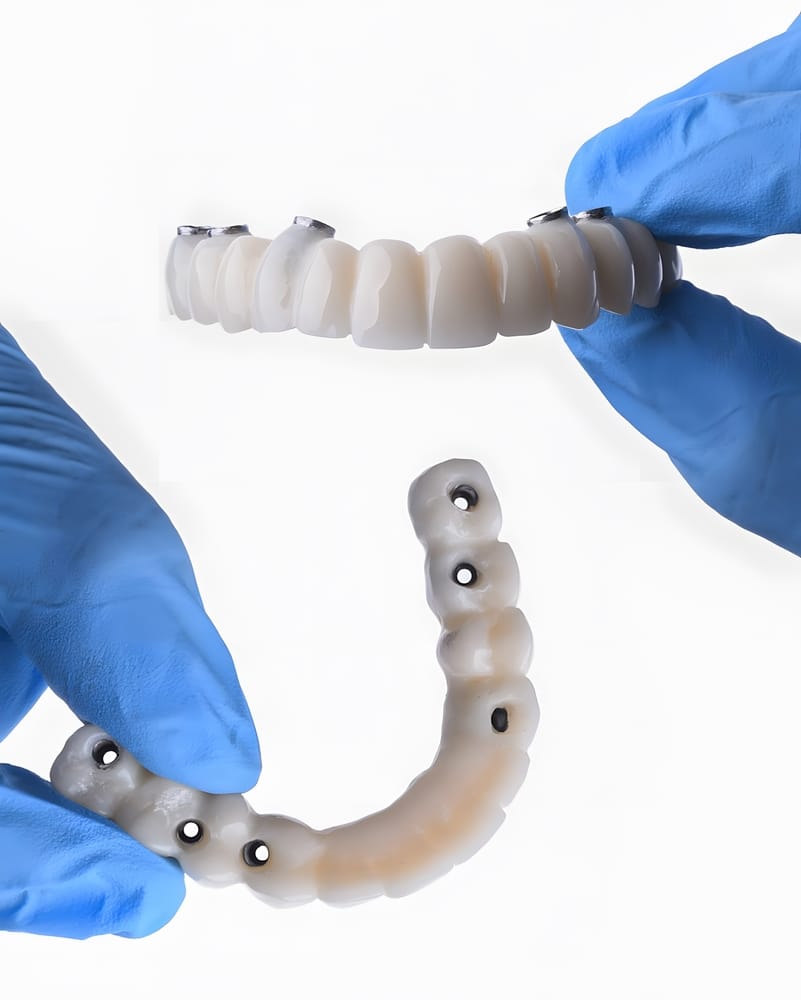
Choosing Between All-on-4 and All-on-6
Dr. Hafeez works with the whole All-on-X family, which includes the two most common designs below. Jaw location, bone density, and bite force influence which dental implant solution suits you. Either option can deliver a same-day smile, often called teeth in a day. If you’d rather keep a removable option, ask about implant dentures.
What to Expect When You Work With Dr. Hafeez
Sitting Down Together First
Your first appointment is mostly talking. Dr. Hafeez asks about your health, your frustrations with your current teeth, and the smile you picture. He then examines your gums and takes a CBCT scan so we can see the structure beneath. After this initial consultation, you’ll know whether you qualify and what the plan involves.
Choosing Posts, Positions, and Pace
With your scan on screen, Dr. Hafeez decides between four and six posts and marks each implant position and angle. You’ll also choose the look of your new teeth and review sedation options that fit your comfort level. At both offices, a board-certified MD anesthesiologist is present for every full-arch surgery. The price includes the anesthesiologist’s services. We offer options ranging from oral sedation to general anesthesia. This personalized care keeps patient comfort at the center and keeps you on schedule.
Treatment Day
On treatment day, you’re numbed, comfortable, and in familiar hands. Dr. Hafeez places the titanium posts, removes any teeth or third molars that can’t stay, and, when your bone allows, fits a temporary set before you head home. Healing then takes a few months while bone grows around each post.
Looking After Your New Teeth
For the first days, soft foods, gentle rinsing, and no tobacco give your gums the best chance to heal. After that, we teach you how to clean around and beneath your new teeth. Add regular cleanings at our office, since professional cleanings reach spots a toothbrush can’t.
Staying Connected for Years
We schedule early visits to check healing, then place your final teeth once everything settles. After that, regular dental check-ups let us examine your bone, gums, and bite. If you notice looseness or soreness in between, don’t wait for your next visit. Call us right away.
What happens if you do nothing?
Waiting feels safe, but missing or failing teeth keep taking a toll. The bill shows up in three places: your budget, your health, and your safety.
Cheaper Today, Pricier Over the Decades
A lower sticker price can hide recurring expenses, such as refitting, remaking, and repairing dentures as your jaw changes shape.
A 20-year cost-effectiveness analysis concluded that implant-supported prostheses are “very cost-effective when compared to conventional complete prostheses.” The model covered lower-jaw tooth loss in Brazil’s public health system, so your own numbers will differ.
A Shrinking Menu Means Shrinking Nutrition
When biting is painful or unreliable, crunchy and chewy foods quietly disappear from your plate. Over months, that narrower diet can shortchange your body.
A MedEdPORTAL teaching module on edentulism, published by the Association of American Medical Colleges, notes that people who have lost all their teeth are “associated with poor dietary habits and nutritional intake.”
Slipping Dentures Are More Than an Annoyance
Loose dentures rub, trap food, and harbor bacteria, so cleaning them thoroughly becomes a daily necessity.
A three-year Journal of Dental Research study of 524 adults aged 85 and older described pneumonia as “a major morbidity and mortality risk among the elderly.” Denture wearers who kept their dentures overnight faced a higher risk. Fixed teeth still need daily cleaning, but they don’t come out at night.
FAQs
How long do full arch dental implants last?
With good care, the posts can last many years, and the visible teeth may need occasional adjustments or replacement as they wear. Your habits matter most. Brush and floss daily, avoid smoking, and keep up with regular dental care. That track record is why many people treat full arch dental implants as a long-term solution.
Do I need to remove my remaining teeth first?
Sometimes. We may need to remove badly damaged or loose teeth through extraction so your implants and new teeth fit properly. Third molars, also called wisdom teeth, may also be removed if they’re still present. In many cases, we complete extractions during the same visit as your surgery. Dr. Hafeez will explain exactly what you need after your exam.
Will the procedure hurt?
Most patients feel pressure rather than pain during surgery because the area is numbed, and sedation options can help you stay relaxed. Soreness, swelling, and mild bruising are common for the first several days. Dr. Hafeez will explain pain control and what to expect before your surgery date. Call us if anything feels unusual afterward.
Can I get full arch dental implants if I have little bone?
Possibly. Because this method places angled posts in the thickest parts of your jaw, it can sometimes avoid bone grafting. A CBCT scan shows us exactly how much bone you have and where it is strongest. If your bone is limited, Dr. Hafeez will talk through your options for a full-mouth restoration after your exam.
Can I eat normally with full arch dental implants?
Many patients return to foods they had been avoiding, since the posts anchor your teeth in bone. During early healing, though, you’ll stick to soft foods until we clear you to progress. After that, chew very hard items with care, just as you would with natural teeth. We’ll give you a clear timeline at your visit.
How much are full arch implants?
Full-arch teeth (All-on-4): $20,000 to $35,000 per arch, including the surgery with a board-certified MD anesthesiologist, fixed teeth the same day, and your final bridge. Snap-in implant dentures are a lower-cost option. Financing available.
Cost depends on how many arches you’re treating, the number of implants, the materials used, and whether you need extractions or bone preparation first. Because every mouth is different, the most accurate answer comes from an exam and a personalized treatment plan. Contact our office to schedule a consultation and ask about payment options that may fit your budget.
Trade Loose Dentures for Full Arch Dental Implants San Marcos Patients Can Count On
If you’re ready to stop planning your life around missing teeth, full arch dental implants San Marcos patients choose can start with a single phone call. Dr. Khizer Hafeez, DDS, will review your scan, answer your questions, and map out your first steps at North County Aesthetics & Implants. Call our San Marcos practice at 760.599.6559or contact us online, then follow us on Facebook for patient stories and practice updates.